Ask almost any Winnipegger, and they have heard a tunnel story.
A passage under the Fort Garry Hotel. A bootlegger’s escape route beneath the Exchange District. A hidden corridor linking the old banks on Main Street, so money could move without ever seeing daylight. The stories are told with total confidence — and almost no proof.
So what is actually under downtown Winnipeg? The honest answer has two parts, and the second one is stranger than the legend.
The stories Winnipeg tells
The famous tales follow a pattern. They are always about secret passages: dug for smugglers during Prohibition, for gangsters in the railway era, for officials who wanted to slip between buildings unnoticed. A favourite version links Union Station and the Fort Garry Hotel — two grand railway landmarks that face each other across Main Street, both opened in the years just before the First World War. What a perfect place for a hidden tunnel.
Here is the problem: for the famous secret passages, there is no confirmed evidence. No verified plans, no authenticated photographs, no documented entrances. The stories have been repeated for so long that repetition started to feel like proof.
That is not the same as saying they never existed. Cities bury their pasts every time a building comes down, and old downtown Winnipeg had deep basements, coal chutes, service corridors and connections that were never meant for the public. Some legends probably grew around real, ordinary underground spaces — the way a basement door becomes, in the retelling, a tunnel to the river.
The underground that is documented
What is documented is less secret and more impressive.
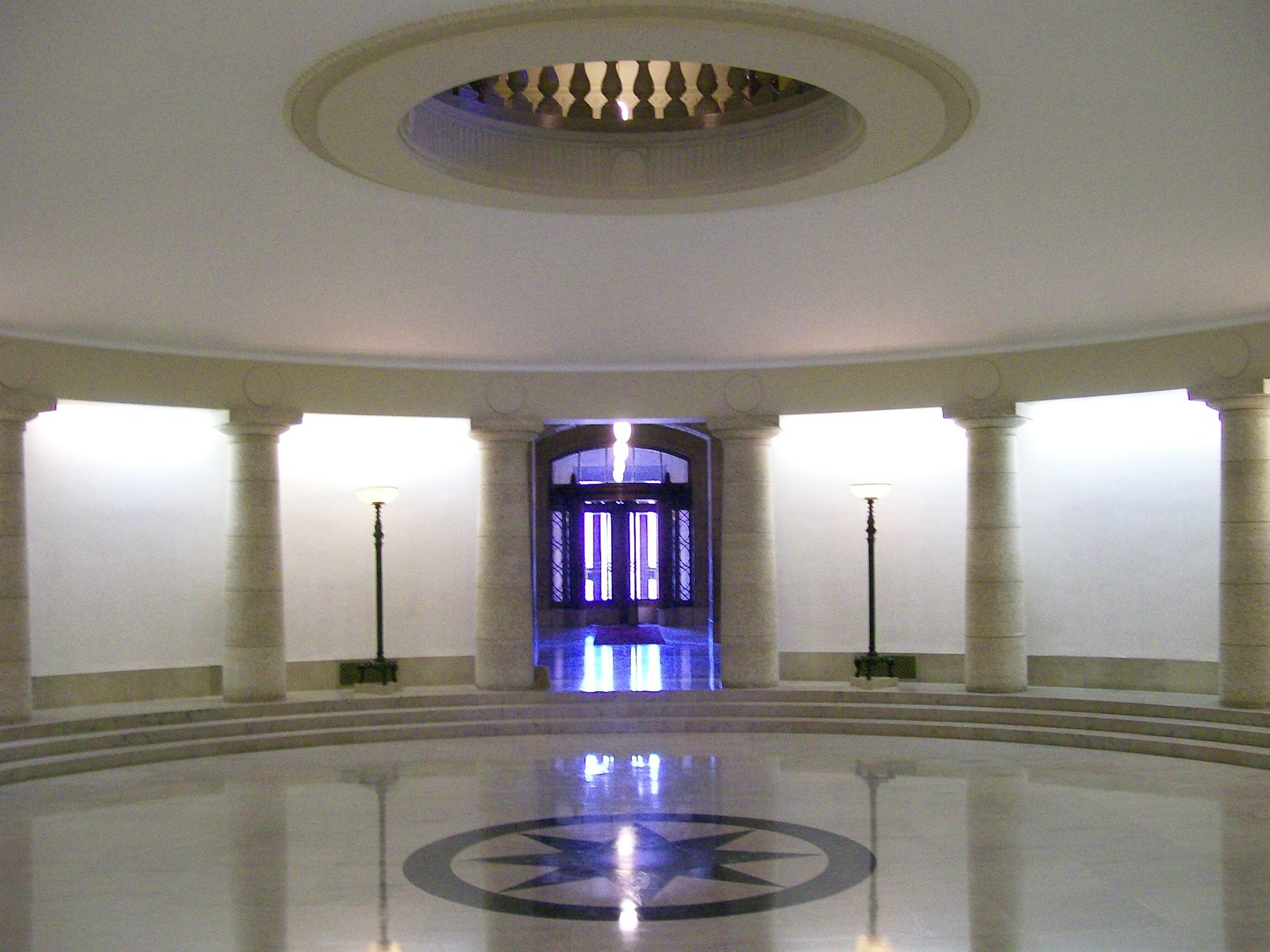
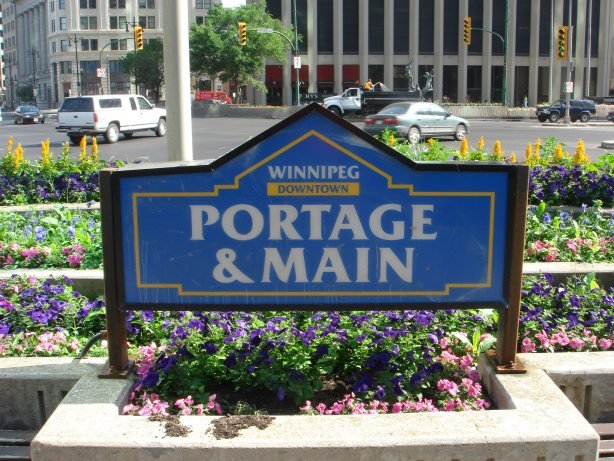
In 1979, Winnipeg made one of the strangest bargains in Canadian urban history. As part of a deal with the developers of the new towers and the underground Winnipeg Square mall, the city closed its most famous intersection — Portage and Main — to pedestrians. For forty years under the agreement, concrete barricades stood where the crosswalks had been, and everyone on foot was funnelled below ground into a circular concourse, nicknamed “the circus,” directly beneath the intersection.
Think about that. At the most famous corner in Canada, the real way to cross the street was a tunnel. Not a legend — a deal, in writing.
The arrangement outlived its contract. The barricades stayed up for forty-six years, until the corner finally reopened to pedestrians in the summer of 2025.
A downtown you can cross in a parka-free zone
The Portage and Main concourse is only one piece of Winnipeg’s genuine underground. The city describes its Walkway system as 14 skyways and 7 tunnels connecting 38 buildings, allowing a protected walk of about two kilometres. Its underground section includes Winnipeg Square and the Portage and Main concourse; overhead, the skyways link office towers, hotels, the arena and the Millennium Library.
In other words, on a January morning at −30, a Winnipegger can cross much of downtown — to work, to lunch, to the library — without stepping outside. No secrecy required. There are maps.
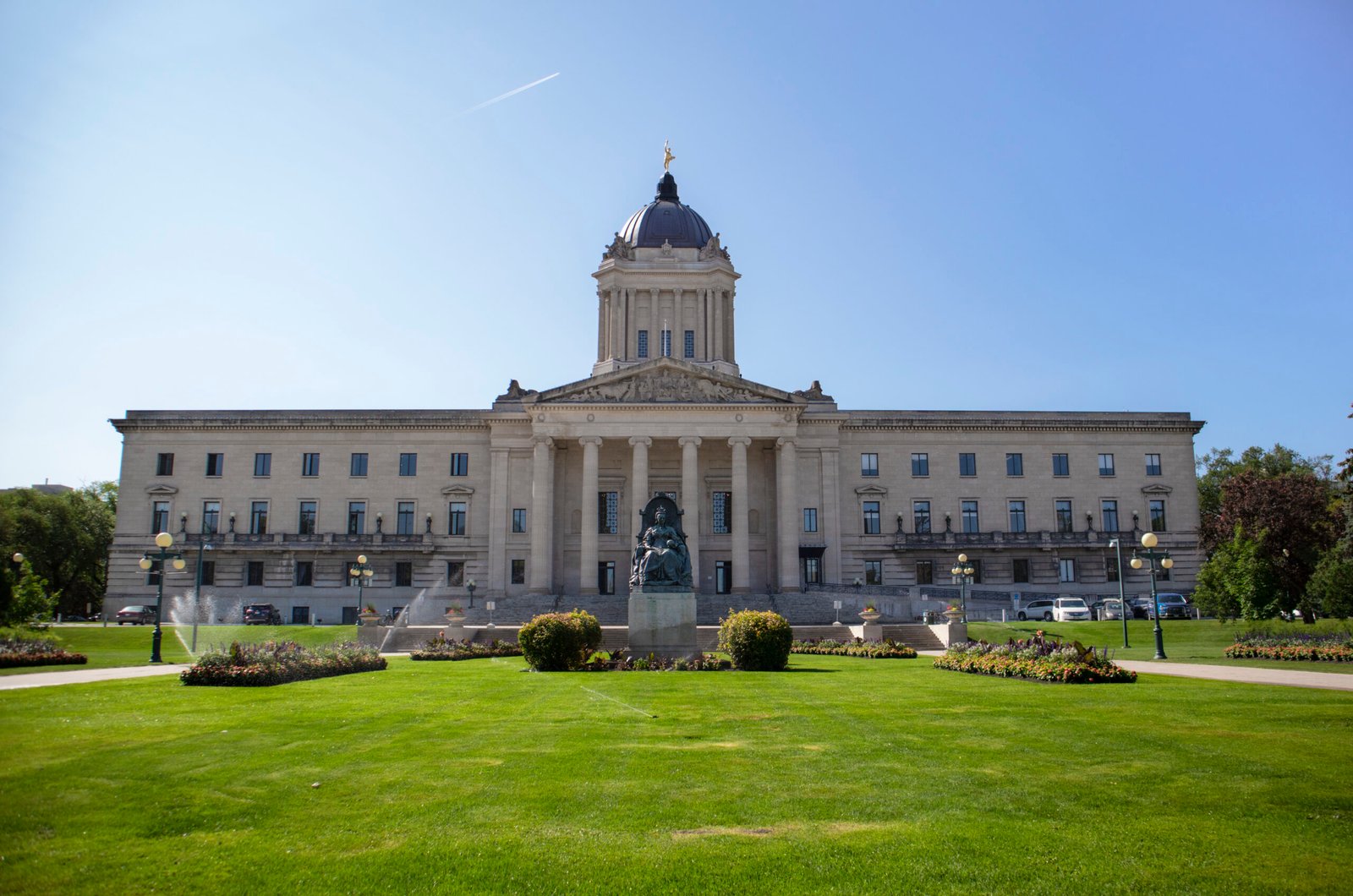
Smaller links dot the core as well: Winnipeg’s 1964 City Hall, for instance, joins its council and administration buildings with an underground walkway — a product of the same era that decided downtown life could happen below the street.
And the logic behind all of it is no mystery. This is a city where winter is not a season but a siege, where the wind at Portage and Main became so famous that the corner itself turned into a byword for cold. A downtown that could be crossed indoors — below the street or above it — was not a luxury. For the office towers, hotels and shops that paid for the Walkway, it was how you kept people downtown at all between November and March. The “secret” underground of the legends was supposed to hide people from the law. The real one hides them from January.
So — are there secret tunnels?
Here is the verdict this story has earned:
- The legendary secret passages: unverified. After decades of telling, no confirmed evidence proves them. Anyone who claims certainty — either way — is going beyond the record.
- The real underground: documented, mapped and used by thousands of people every day, hidden in plain sight under one of the coldest big cities on Earth.
Winnipeg probably never needed secret tunnels. It built something better: an official one, with shops in it.
Have you ever crossed Portage and Main the underground way — through the “circus”?
Keep exploring:
- Seven Oaks 1816: The Fifteen-Minute Battle That Created a Nation
- The Winnipeg General Strike of 1919: The Six Weeks a City Shut Down
Sources: Wikipedia, “Winnipeg Walkway” (figures as described by the City of Winnipeg: 14 skyways, 7 tunnels, 38 buildings) · Broadview Magazine, on the 1979 closure of Portage and Main · CBC News, on the corner’s 2025 reopening to pedestrians after 46 years · Archiseek, “1964 — City Hall, Winnipeg” · The tunnel legends themselves are presented as what they are: unverified stories, a framing this site shares with the Friendly Winnipeg Facts video above.
Image credits: Portage and Main, Winnipeg — photograph, public domain, via Wikimedia Commons.