
On the morning of May 15, 1919, an entire city clocked out — and stayed out for six weeks.
Winnipeg was one of the biggest cities in Canada, a booming railway hub on the Prairies. But that spring, more than thirty thousand of its workers walked off the job together: factory hands, firefighters, postal clerks, streetcar drivers. It became the most famous strike in Canadian history — the Winnipeg General Strike. And strangely enough, it started at a telephone switchboard.
Watch the video: https://www.youtube.com/watch?v=NtceI8Pu2KA
Why Winnipeg walked out
To understand why, picture Winnipeg just after the First World War. Soldiers had come home to scarce jobs, soaring prices, and wages that hadn’t kept up. Workers in the building and metal trades wanted something basic: the right to bargain together, through their own councils, for better pay and safer conditions.
Their employers refused to recognize those bargaining councils. So the city’s unions voted — overwhelmingly — to shut the whole city down.
The day the city went quiet
At eleven o’clock on May 15, the deadline hit. Among the very first out the door were the city’s telephone operators — the “hello girls” — who had left their switchboards at seven that morning.
Within hours, Winnipeg fell quiet. No streetcars. No mail deliveries. Silent factories and shuttered shops.
And yet the city didn’t collapse. The Central Strike Committee organized the essentials, and bread and milk still reached people’s doors — with the committee’s permission. In those first days the mood was almost festive: families gathered in parks to hear the latest news, certain they would win.
Two Winnipegs, staring each other down
Winnipeg’s business and political leaders were organizing too. They formed the Citizens’ Committee of One Thousand and painted the strike as something darker: a revolutionary conspiracy.
Federal ministers came to town — and met only with the citizens’ committee. When the city’s own police refused to sign a no-strike pledge, they were fired and replaced by a rough force of “Specials,” armed with clubs.
The two Winnipegs were now staring each other down.
Bloody Saturday: June 21, 1919
Before dawn on June 17, police raided homes across the city and arrested ten strike leaders. They were jailed at Stony Mountain Penitentiary, charged with seditious conspiracy.
Four days later, returned soldiers announced a “silent parade” down Main Street to protest the arrests, and thousands came out.
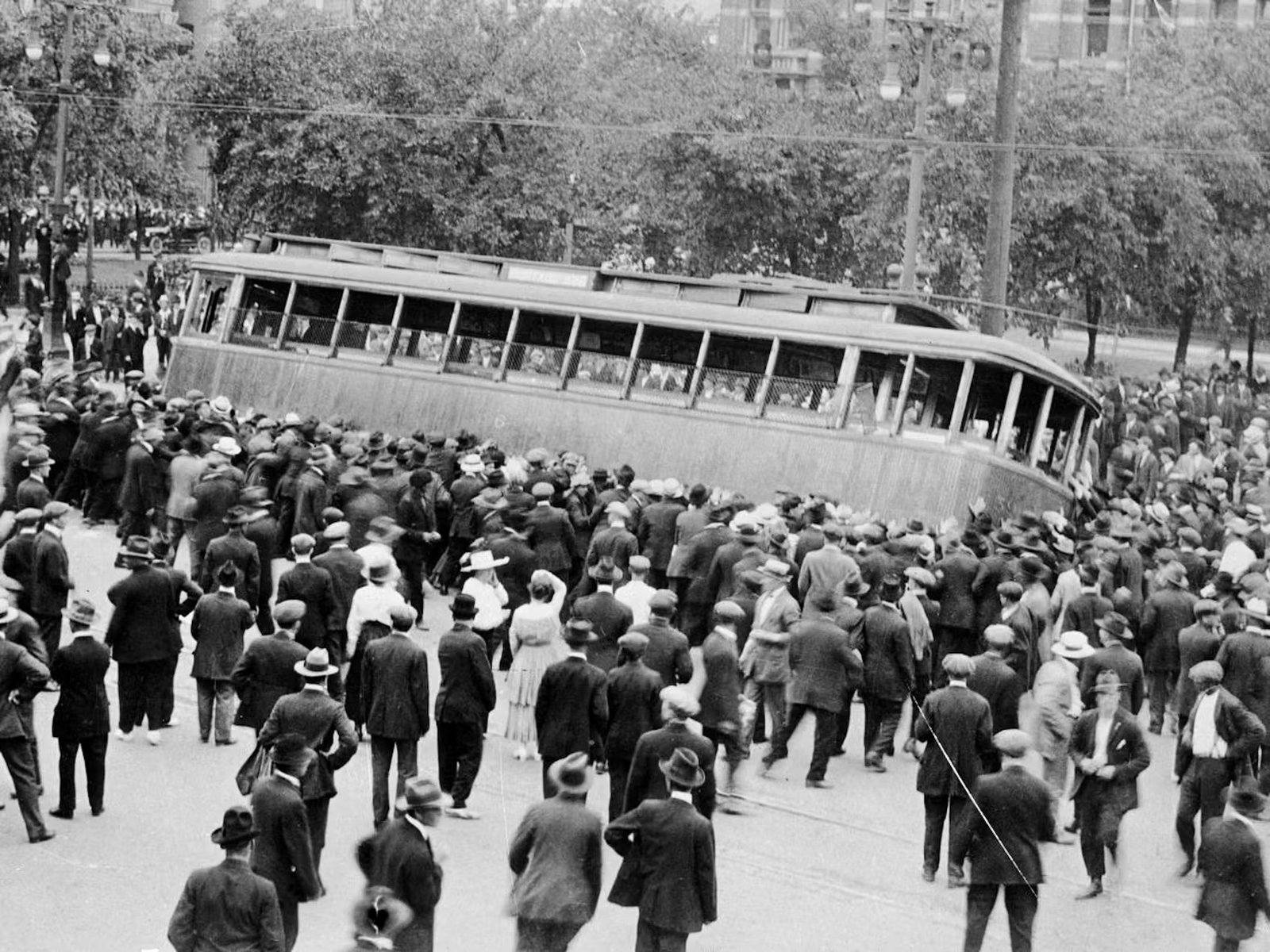
What happened next is the part of this story Winnipeggers still lower their voices for. On the afternoon of June 21, outside City Hall, the mayor read the Riot Act. Mounted police charged into the crowd on horseback, swinging clubs. A streetcar driven by a strikebreaker tried to force its way down Main Street — and demonstrators stopped it, tipped it off its tracks, and briefly set it on fire.
Then the Mounties opened fire.
Two men were killed: Mike Sokolowski and Steve Szczerbanowicz. About thirty more people were injured, and ninety-four were arrested that day. Soldiers patrolled the downtown streets that night.
The day became known as Bloody Saturday.
The strike ends — and the twist
Fearing more bloodshed, the committee called the strike off on June 25. At eleven in the morning on June 26 — exactly six weeks after they had walked out — Winnipeg’s workers went back to their jobs.
In the short term, the strike had lost. Its leaders stood trial, several went to prison, and many strikers lost their jobs.
But here’s the twist: they hadn’t lost for long.
In Manitoba’s 1920 election, labour candidates won eleven seats in the provincial legislature — four of them strike leaders, three of those still in jail when the votes were counted. One arrested editor, J. S. Woodsworth, was elected to Parliament in 1921. In 1932, he helped found the Co-operative Commonwealth Federation — the party that eventually became today’s New Democratic Party.
Over the following decades, the rights those workers demanded — to organize, to bargain, to be heard — became the law of the land. Historians still call the strike a turning point in Canadian history.
Those same years, a very different Winnipeg landmark was rising a few blocks away — a temple-like capital building whose construction ran straight into this strike. Read: Inside the Manitoba Legislative Building: Fossils, Secrets and the Golden Boy
The streetcar that still glows
Winnipeg never forgot. Walk along Main Street today, across from City Hall, and you’ll find a ghost made of steel and glass: a streetcar, tipped on its side, rising out of the pavement at Pantages Plaza.
It was unveiled on June 21, 2019 — exactly one hundred years after Bloody Saturday — and at night, it glows.
A whole city stopped for six weeks. A century later, Winnipeg still keeps its memory lit.
Have you ever noticed that streetcar? And do you think a city could ever stand together like that again?
Keep exploring:
- Inside the Manitoba Legislative Building: Fossils, Secrets and the Golden Boy
- Duff’s Ditch: The Joke That Saved Winnipeg
Sources: The Canadian Encyclopedia · Library and Archives Canada · University of Manitoba · Winnipeg Arts Council
Image credits: Tipped streetcar, Main Street, 1919 — L. B. Foote, public domain · Crowd at the old City Hall — L. B. Foote, public domain · RNWMP on Main Street — Library and Archives Canada, public domain (all via Wikimedia Commons)